TT RIGHT PNG

AC Interference: The Problem Just Got Bigger

June 24 at 11:00 am CDT

The grid is changing - and pipeline operators are the last to know.

Power companies are quietly upgrading existing transmission lines with advanced conductors that can triple capacity on the same towers, with no obligation to notify you. If your AC interference study is more than two years old, it may no longer reflect the real load on your corridor - and your personnel and assets could be at risk right now.

On June 24th, join Joe Pikas, lead contributor on the new AMPP SP0177 standard for AC and lightning mitigation, as he breaks down what's changed, what's at stake, and what you need to do about it.

You'll walk away knowing:

  • What reconductoring is and why it's happening faster than any new transmission build

  • How load increases from advanced conductors affect your induced AC voltages, fault current exposure, and mitigation design

  • What the updated AMPP SP0177 standard requires — and where most operators have gaps

  • Why aboveground appurtenances like valves, risers, and test stations are a personnel safety liability you may not have assessed

  • How to remodel your affected corridors using AC Mitigation PowerTool to get defensible, PHMSA-compliant results


 

Register to Save your Seat

Our Speaker

Joe Pikas

Joe Pikas

Technical PL & Corrosion SME
 Technical Toolboxes

Agenda

 Learn how to run AC interference calculations faster, identify mitigation gaps, and produce PHMSA-compliant results in less time. 

AC_Webinar_Portrait_Final

Intro

Welcome, speaker bio, agenda overview

The Grid Is Changing Faster Than Your AC Study

What reconductoring is, how fast it's happening, and why operators have zero notification rights when a power company upgrades a co-located or remote corridor

The Numbers Are Different Now

Conventional vs. advanced conductor load comparison; what 1,500A vs. 3,000A vs. 7,500A scenarios mean for induced steady-state voltages and coupon current densities

What SP0177 Now Requires

Joe as DPM on the new AMPP revision walks through key updates: steady-state vs. fault condition design objectives, coating stress voltage limits, and documentation requirements tying to PHMSA TVC

The Safety Problem Nobody's Talking About

Valves, risers, test stations, scraper traps as personnel shock hazards; 15V touch voltage threshold; gradient control mats and dead-front test station requirements under SP0177 Section 5

Live Tool Walkthrough

Modeling a reconductored corridor scenario in AC Mitigation PowerTool; how fault current, coating stress voltage, and step/touch potential outputs change when you update power line parameters

What To Do Next

Check potentials on co-located and remote corridors, watch for reconductoring activity, re-run models; engage AMPP, INGAA, API

Closing and Q&A

Key takeaways, product CTA, upcoming resources and Q&A

Additional Resources

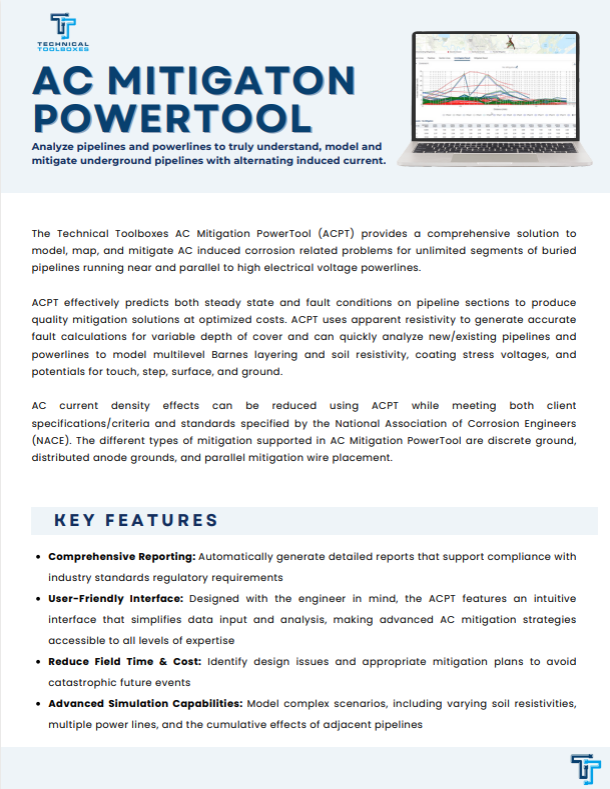
ACPT One-Pager

One Pager

Key Features and Applications of AC Mitigation PowerTool

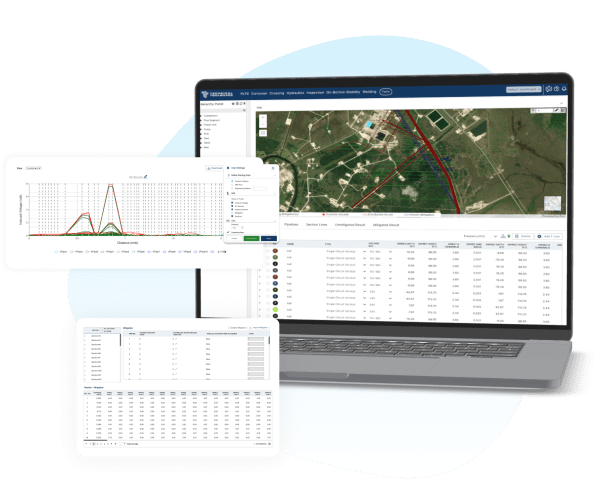
ACPTImage

Video Demo

See ACPT in Action and come up with questions during the live session


AC Mit Webpage pic

Case Study

See how ENGORR Integrity Inc. uses ACPT